What is Qigong?
Qigong (pronounced “chee-gung”) is a gentle movement practice that combines slow, intentional movements, breathing, and focused attention.
With roots in traditional Chinese practices, Qigong has been practiced for centuries as a way of supporting health and well-being. Today, people practice Qigong for many reasons: to move more comfortably, improve balance and mobility, reduce stress, and develop a greater sense of connection with their bodies.
Unlike a workout focused on pushing harder or doing more, Qigong invites you to slow down and pay attention. The movements are typically gentle and adaptable, making the practice accessible to people of different ages, fitness levels, and abilities.
You don't need to be flexible, athletic, or have any previous experience with movement practices to begin. Qigong can be practiced standing or seated.

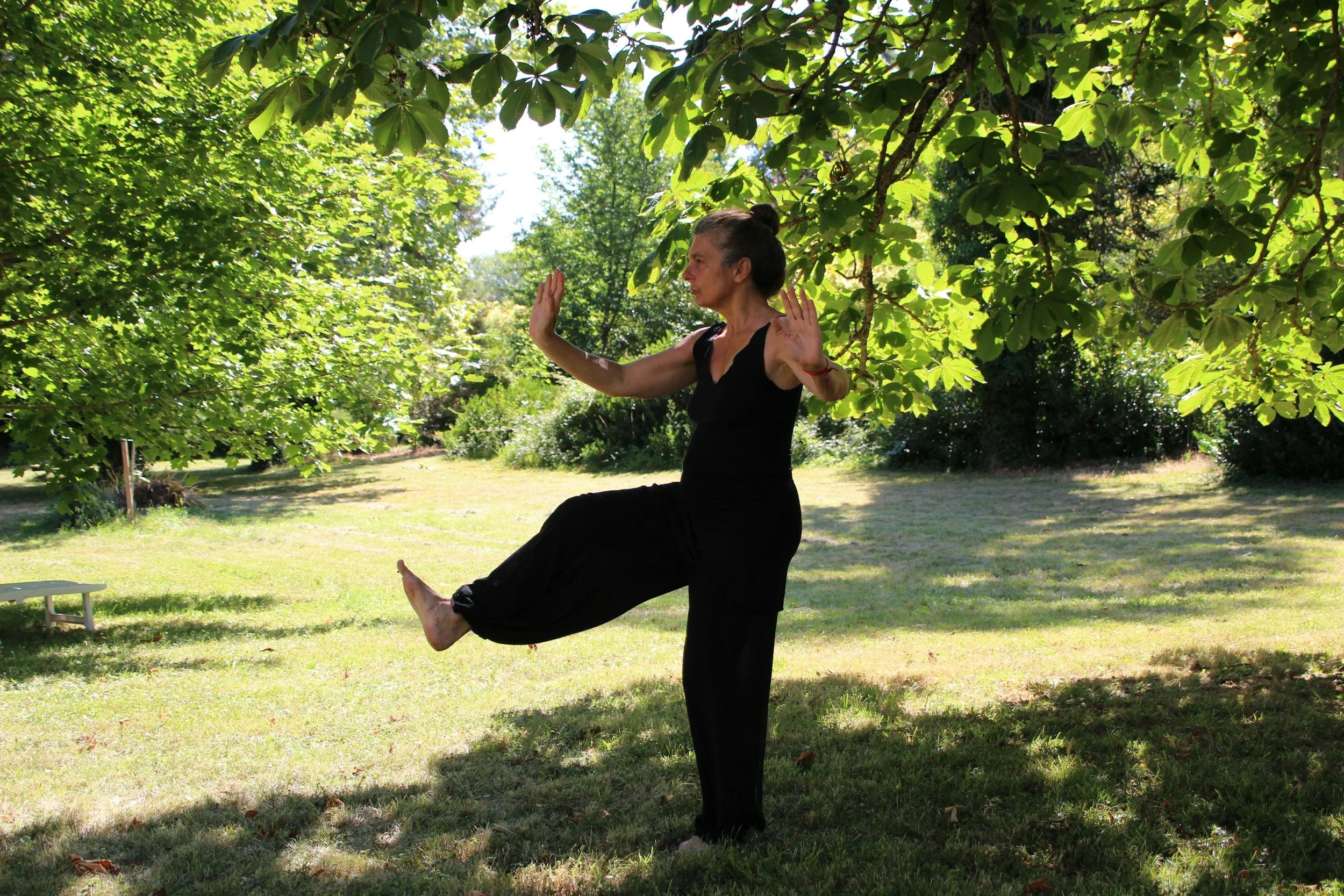
What Does a Qigong Practice Look Like?
A typical Qigong practice may include a combination of:
Gentle, flowing movements that encourage mobility, coordination, and body awareness
Breathing practices that help bring attention to the present moment
Simple postures and weight shifting that can support balance and stability
Moments of stillness to notice how your body feels
The movements are generally slow and repetitive, giving you time to explore them rather than rush from one exercise to the next. You may follow a specific sequence or spend time practicing individual movements.
There is no need to memorize complicated choreography or perform the movements perfectly. The goal is not to force your body into a particular position, but to explore movement with awareness and work within your own abilities.

Who Is Qigong For?
Qigong can be a wonderful option for people who:
Are looking for a gentler way to move
Want to improve mobility, balance, or body awareness
Feel intimidated by traditional exercise or fitness environments
Are interested in incorporating more mindful movement into their routine
Are curious about meditation but find it easier to focus while moving
Want a practice that can be adapted to their individual needs
Already practice yoga and are interested in exploring something different
Whether you're completely new to movement or have spent years exercising, Qigong offers an opportunity to slow down, move with intention, and develop a different relationship with your body.
How Is Qigong Different From Yoga?
Qigong and yoga have some things in common. Both can incorporate movement, breathing, and focused attention, and both can help you develop greater awareness of your body. But the practices approach movement in different ways.
Yoga often involves moving through a series of poses or holding postures, with an emphasis that may include strength, flexibility, balance, and alignment. Depending on the style, a yoga practice can range from gentle and restorative to physically demanding.
Qigong movements are typically slower, simpler, and more repetitive. Rather than moving through a sequence of poses, you may spend time exploring individual movements and noticing how they feel in your body. The practice often includes gentle weight shifting, coordinated breathing, flowing movements, and moments of stillness.
There is no need to be flexible or able to get into particular positions. Qigong can be adapted to different bodies and abilities, making it an accessible option for people looking for a gentler approach to movement.
If you enjoy yoga, you may find that Qigong offers a different—but complementary—way to move. And if yoga has never felt like the right fit for you, Qigong may offer another way to explore the benefits of mindful movement.
What Is the Difference Between Qigong and Tai Chi?
Qigong and Tai Chi share common roots and have some similarities. Both may involve slow, intentional movement, breathing, and focused attention.
Generally speaking, Qigong practices tend to focus on individual movements, simple sequences, breathing, and standing or moving meditation. Tai Chi is typically practiced as a longer, structured sequence of movements.
You don't need any previous experience with Tai Chi to practice Qigong. Qigong can be an approachable place to begin exploring mindful movement.